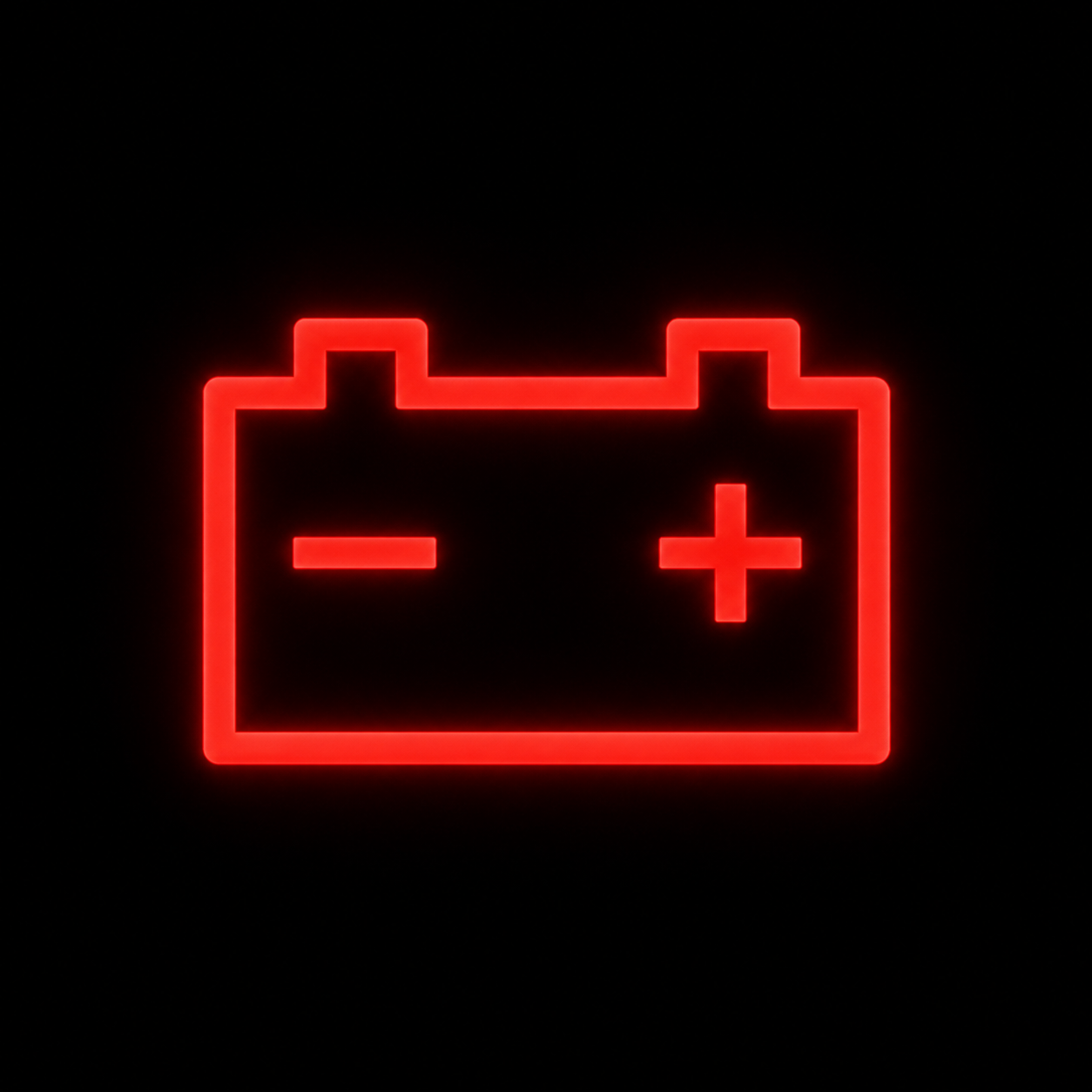
What it means
The battery warning light indicates a charging-system problem, not always a dead battery. While the engine runs, the alternator should supply power and maintain roughly 13.5–14.5 volts at the battery on many gasoline cars. If voltage drops, the red battery icon may come on — and on modern cars, low voltage during cranking or while driving can also store communication faults that light TPMS, check engine, traction control, or electric power steering warnings at the same time.
Multiple lights at startup or when the engine starts
A cluster of amber lights that appear for a few seconds when you turn the key — battery, check engine, traction control, TPMS, power steering — is often a voltage dip during cranking, not five separate failures. The starter draws heavy current; a weak battery, bad ground, loose terminal, or failing alternator can drag system voltage down enough to set temporary warnings. If all lights go out after the engine is running and the car drives normally, note whether the battery symbol flickers at idle or returns while driving — that pattern still deserves a charging-system test.
Flickering dashboard lights while driving
Lights that flicker or pulse while driving — but look stable at idle — often point to a loose or corroded connection, failing alternator under load, or a slipping belt rather than random module failures. Wiggle-test battery terminals and the main engine ground strap while watching voltage if it is safe to do so. A refurbished or low-quality alternator can pass a quick bench test yet drop output when hot or when headlights, blower, and rear defroster are on.
What to do first
- Turn off heated seats, rear defroster, and high beams to reduce electrical load.
- Avoid shutting off the engine in an unsafe place — a weak charging system may not restart.
- With the engine running, check whether headlights brighten slightly when you rev — dim lights at idle that brighten with RPM can mean alternator or belt trouble.
- Inspect the drive belt for glazing, cracks, or slipping; look for corrosion on battery terminals.
- Ask for a loaded charging-system test (voltage with headlights and blower on), not only a quick alternator lamp check.
Common causes
- Failing alternator or voltage regulator
- Loose, corroded, or damaged battery terminals
- Weak or old battery that cannot hold load
- Broken, glazed, or slipping serpentine belt
- Bad engine or body ground strap
- Charging circuit fuse or wiring fault
- Recent battery disconnect leaving stored U-codes until cleared
How long can you drive with the battery light on?
There is no safe fixed distance. The car may run on battery alone for minutes to under an hour depending on load, battery condition, and whether the alternator is completely dead or weak. If the light stays on while driving, head toward a shop or safe place to stop — do not plan a long trip. If steering becomes heavy, lights dim severely, or warnings multiply, pull over as soon as safe.
When to stop driving
Stop safely if the battery light stays on with dimming headlights, heavy steering, burning rubber smell from a slipping belt, overheating, or multiple red warnings. A charging failure can leave you stranded without warning once the battery is drained.
Battery Warning Light FAQ
What does the battery light mean on a car?
The red battery symbol on your dashboard is a charging-system warning, not a simple "replace the battery" message. With the engine running, the alternator should hold roughly 13.5–14.5 volts at the battery. When voltage drops — from a weak alternator, slipping belt, bad ground, or corroded terminals — the light comes on. On modern cars, low voltage can also trigger TPMS, traction control, or power steering warnings at the same time. Test charging under load (headlights and blower on), not only at idle.
What does a battery warning light mean while driving?
A battery warning light that appears or flickers while driving means the charging system is not keeping voltage high enough. Common causes include a failing alternator, loose battery terminals, a glazed or slipping serpentine belt, or a weak battery that cannot support electrical load. If the light stays on, dim your loads (A/C, heated seats) and head for a shop — the engine can stall once the battery drains. A light that clears only when you rev the engine often points to alternator or belt trouble at low RPM.
Why is the battery light on at idle but goes out when I rev the engine?
That pattern often means the alternator or belt is not making enough output at low RPM, or a connection is marginal until higher engine speed. Check belt condition and tension, battery terminals, and main grounds, then measure charging voltage at idle versus ~2,000 RPM with headlights and blower on. Do not ignore it — the light may stay on longer as the alternator worsens.
Does the battery light mean I need a new battery?
Not always. Test the charging system first. A good battery with a failed alternator can still trigger the light. Conversely, a weak battery can overload a marginal alternator. Many shops test both together.
Why did power steering get heavy when the battery light came on?
Electric power steering needs stable voltage. Low charging voltage — especially during startup or with a failing alternator — can reduce assist or store a fault until voltage recovers. Fix charging and grounds before replacing steering components.
Why did several warning lights come on when I started the car?
Low system voltage during cranking is a common cause on 2010+ vehicles. TPMS, check engine, traction, ABS, and EPS can all set communication or low-voltage codes together. If lights clear after startup, still test battery, terminals, belt, and alternator output under load.
Can a bad alternator cause the check engine light?
Yes. Low or unstable voltage can set powertrain and network codes. Scan codes — U-codes often indicate communication or voltage issues. Repair charging first; other lights may clear without separate repairs.
What voltage should I see with the engine running?
Many gasoline cars show about 13.5–14.5 volts at the battery with accessories off. Significantly lower — or voltage that collapses when you turn on headlights and blower — suggests charging trouble. Exact specs vary by vehicle; use your repair manual as the authority.
I just replaced the battery and alternator but the light is still on — why?
Check belt tension and alignment, terminal tightness, ground straps, and whether a refurbished alternator performs under load when hot. Also clear stored codes after major electrical work — some warnings linger until a drive cycle or scan tool reset after the root cause is fixed.
Related symbols
Dashboard symbols vary by make and model. Always confirm the exact meaning in your owner's manual.